| Fabric type | What the published testing found | Breathing and comfort | Planning use |
|---|---|---|---|
| Tightly woven cotton (quilting cotton) | Of 32 cloth materials tested, three of the five most effective were 100% cotton | Some of the best-filtering fabrics were also the hardest to breathe through | A sensible default for the main layers |
| Cotton with raised threads (flannel) | Most cotton fabrics with raised threads tended to filter best | Same trade-off as above, so test it on your face | Good inner layer, worth the extra bulk |
| Knits and loose weaves | Tighter woven fabrics generally filtered better than knits and loosely woven fabrics | Easy to breathe through, but with the least protection | Avoid as the only filtering layer |
| Synthetics (polyester, polypropylene) | Four of the five lowest performers were synthetic, yet one 100% polyester fabric ranked in the top five | Varies by fabric | Do not assume; mixing with cotton did not help |
Figures from the NIST 2020 fabric study and the ACS Nano review of mask materials.
The best fabric for face mask making is a tightly woven 100% cotton, ideally with a slightly raised surface such as flannel, used in more than one layer. Choose the weave you can still breathe through comfortably.
If you are starting from scratch, read how to make a face mask at home first, then come back here to choose cloth for each layer.
What the testing says about the best fabric for a mask
The most useful published comparison is the NIST study of 32 cloth materials. Three of the five most effective at blocking particles were 100% cotton, and most of the cotton fabrics with raised threads tended to filter best. That points towards flannel and napped cotton rather than slick, thin weaves.
Weave matters as much as fibre. NIST reported that tighter woven fabrics generally filtered better than knits and loosely woven fabrics. This was a small sample, so treat it as a strong tendency rather than a rule for every bolt of cloth.
Expectations need to stay modest. The best-performing single fabric layer blocked 20% of particles in the size range of the virus, and NIST tested particles from 50 to 825 nm. None of the materials came close to the efficiency of N95 masks. A review in the peer-reviewed literature likewise found that most single and multi-layer combinations had a filtration efficiency of less than 30%.
Situation: you want the most filtering you can get from fabric
Go for layers of tightly woven cotton. NIST noted that multiple fabric layers could improve cotton’s effectiveness even further, so two or three layers of quilting cotton or flannel is a better bet than one thick layer of something else.
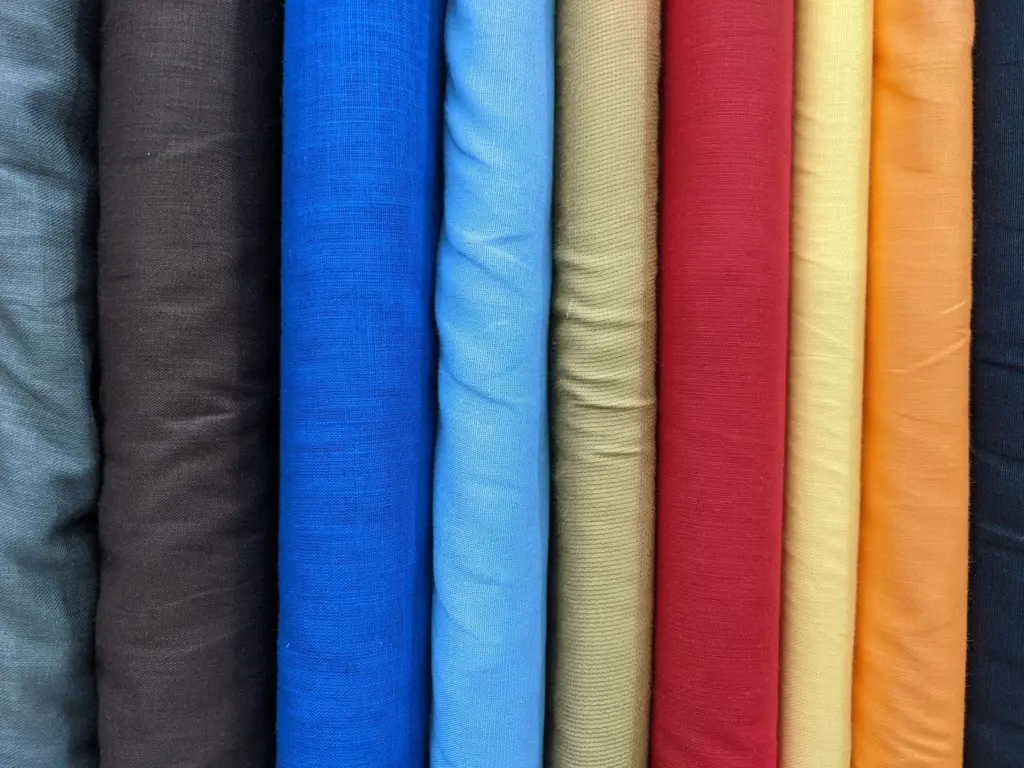
- Quilting cotton outside, flannel inside: this pairs a tight weave with a raised surface, the two features the findings favour.
- Stay with cotton throughout: cotton-plus-synthetic combinations did not show increased effectiveness, so adding a synthetic layer is not a shortcut.
- Expect a breathing cost: some of the fabrics that filter the most particles are also the hardest to breathe through, so each added layer needs a comfort check.
Fit is part of the fabric decision too. Leakage primarily occurs along the outer edges that touch the face, so a well-cut shape matters as much as the cloth. Our guide to face mask pattern sizing covers shaping the edges to sit close.
Situation: comfort and breathing come first
The fabrics hardest to breathe through are generally the ones that filter best, which is the central trade-off of homemade masks. If a mask feels stuffy enough that you keep pulling it down, a slightly more open cotton you actually wear is more useful than a dense one you do not.
- Fewer layers of a lighter cotton: suits short errands and people who find dense cloth tiring.
- Do not drop to a loose weave: a review in the Journal of Public Health and Emergency describes loosely woven homemade cloth products as providing the least protection.
- Avoid cloth masks where breathing is already difficult: a cloth face mask is not safe for children younger than 2 years of age or anyone experiencing trouble breathing, per CDC guidance reported by Healthline.
Situation: you are weighing flannel, linen or synthetics
Flannel is the clearest upgrade over plain cotton because of its raised fibres. Linen and other less-tested fabrics are harder to judge. The pack of studies here does not rank them, so choose them by weave: hold the cloth up and favour a dense, even structure over one that shows daylight through gaps.
Synthetics are a mixed picture. Four of the five lowest performers in the NIST tests were synthetic, but a 100% polyester fabric was one of two synthetic samples in the top five. Polypropylene is a synthetic fibre too, so the sensible reading is that it is unproven for homemade masks rather than automatically good or bad. If you want a nonwoven insert, the approach in our face mask with filter pocket pattern guide keeps it removable.
- Choose flannel when: you can tolerate a slightly warmer, denser mask.
- Choose plain quilting cotton when: you want a stable, easy-to-sew cloth that is still a tight weave.
- Skip stretchy knits as the filter layer: they sit at the weak end of the weave findings.
Reading thread count and fabric labels
Thread count is a useful hint, not a guarantee. Researchers recommend describing fabric by weight in grams per square metre, production technique (woven, knit or non-woven) and, where applicable, threads per inch. Shop labels rarely give all three.
Names can mislead as well. Materials sold as cotton T-shirt fabric vary widely in thread count, density and texture, so two items with the same label may behave differently. When labels are vague, rely on a hands-on check: choose woven over knit, then hold the cloth to the light and prefer the one that lets through the least.
What fabric cannot do
Cloth masks are less effective at filtering than surgical masks and filtering facepiece respirators. Surgical masks filter approximately 95% to 98% of particles depending on their ASTM categorisation, far above the cloth results above. Cloth masks mainly provide source control and do not protect the wearer to the same extent as respirators.
No federal performance standard has applied to cloth masks. ASTM and NIOSH jointly developed a Barrier Face Covering Standard (ASTM F3502-21), but it serves as a recommendation and is not enforceable. If you need dependable wearer protection, fabric choice will not close that gap.
Frequently asked questions
Is cotton always better than synthetic fabric?
No. Cotton dominated the top of the NIST ranking, but a polyester fabric also placed in the top five. Cotton is the safer starting point, not a universal winner.
Does a higher thread count mean a better mask?
A tighter weave generally filtered better, but thread count alone is unreliable because cotton items vary widely in density and texture. Combine the count with a light check and a breathing test.
Can anyone wear a fabric mask?
Not everyone. Cloth masks are not safe for children younger than 2 years of age or for anyone having trouble breathing.