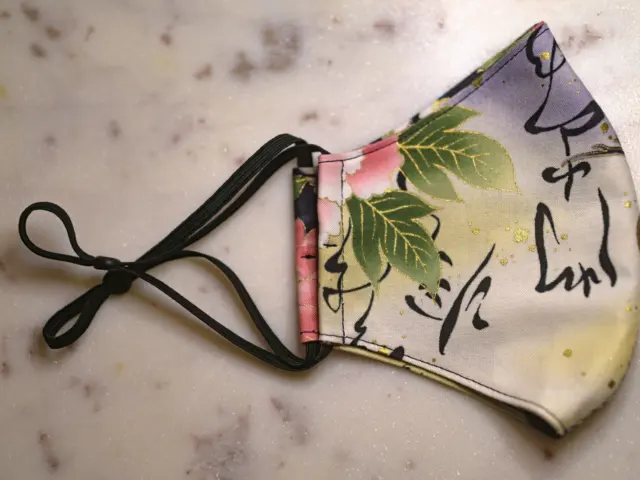
A mask comes off damp after a long day, and the question is how to wash cloth face masks without wearing out the ear loops or bending the nose wire.
Quick answer: Wash a mask at the end of each day, or after every use if you rotate several, using warm water and soap or detergent. Scrub it by hand or run it in a mesh bag with regular laundry. Air-dry it completely, keep heat away from the elastic, and retire the mask once the fabric thins or the straps fail.
If you are still choosing or sewing your masks, start with how to make a face mask at home, then return here for upkeep. The routine below climbs from the gentlest option to firmer measures, and ends with the signs that a mask should stop being worn.
How often to wash
A cloth mask needs washing at the end of each day it is worn. Wirecutter advises washing masks at the end of each day, especially if they are dirty or wet. Soak Wash sets a stricter rule: wash your mask after every use.
The two rules suit different habits. If you wear a single mask from morning to night, the end-of-day wash is enough. If you change masks during the day, treat each one as used once it comes off and put it straight in the laundry pile rather than hanging it up to wear again. A mask that has become damp or visibly dirty should not wait for the evening.
That second habit has a practical consequence. A mask washed after every use must be dry before it is worn again, so a small rotation of masks saves you from putting on a damp one. The replacement section below returns to this.
Hand washing: the gentlest first step
Hand washing is the simplest intervention and the kindest to elastic, because you control the water temperature and nothing tumbles against it. It suits a single mask at the end of the day or a washing machine that is already busy.
- Fill a basin with warm water. Soak Wash says hand washing tolerates water up to 40C/104F. Treat that as a ceiling, not a target. Wirecutter notes there is usually no need for hot water when washing a mask.
- Add soap. Wirecutter’s guidance quotes Hinestroza: “Any soap works.” You do not need a special product for a mask.
- Scrub the whole mask. Soak Wash recommends scrubbing for 20 seconds, so work the soap through both layers and along the edges where skin contact is greatest.
- Rinse well. Wirecutter’s hand-wash advice ends with a thorough rinse, so run clean water through the fabric until the soap is gone.
- Hang it to dry. Move on to the drying section below rather than leaving it in a heap.
If the mask has a nose wire, handle that edge softly while scrubbing. Hand washing leaves you free to do that, which a machine does not.
Machine washing with a mesh bag and detergent
The next step up is the washing machine, which suits a week of masks or a household that wears several each day. Machine washing adds agitation and, if you choose, more heat, so the set-up matters for the straps.
- Put the mask in a mesh laundry bag. Wirecutter recommends a mesh laundry bag to avoid snagging, because it keeps ear loops or straps from catching on other items. The bag also lets masks collect until there is a full load.
- Add the masks to the regular wash. Country Living says fabric masks can go in the machine with your regular laundry. Use your usual detergent.
- Choose the temperature. Start from the care label on your masks or on the load.
- Take the bag out when the cycle ends and move the masks to the drying stage.
Choosing a wash temperature
The guidance on temperature differs, and heat accelerates breakdown, particularly for masks with elastic fasteners. Soak Wash says machine washing should ideally be at least 60C/140F. Country Living says the care label usually indicates around 40 or 60 Celsius. Wirecutter says hot water is usually unnecessary.
The practical reading is to follow the label and treat 60C as the upper end of what is reasonable. Wirecutter notes that heat accelerates breakdown, particularly in masks with elastic fasteners. A warm wash is the sensible default for elastic-looped masks, and a hotter wash makes sense only when the label allows it and you want the stronger clean that Soak Wash describes.
Drying: from air-drying to the dryer
Drying is where most elastic and any nose wire are lost, because heat is harder on masks than the wash itself. Work upward from the lowest-heat choice and stop at the first one that suits your masks.
Air-drying as the default
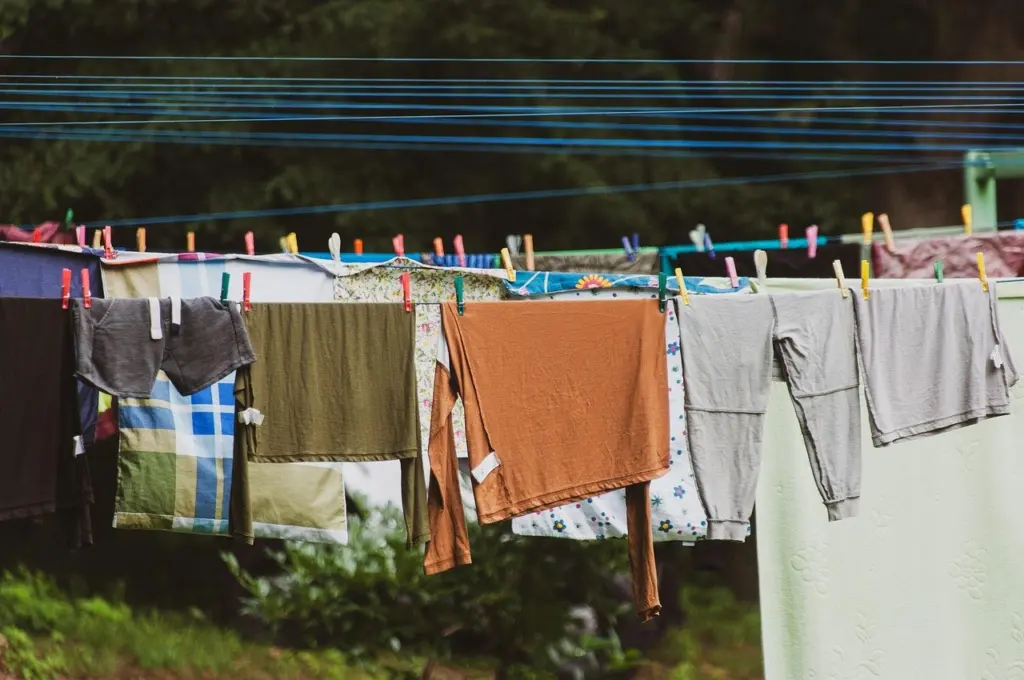
Air-drying is the best option for masks with elastic loops. Wirecutter says the heat of a dryer can accelerate wear and tear, so it is best to air-dry your mask on a rack and let it dry completely before wearing it. Pin it by the edge or hang it by the loops somewhere with airflow, and keep it out of a damp pile.

Using the dryer
The dryer is a firmer measure and carries a trade-off. Soak Wash says to dry in the dryer on high heat if possible. Wirecutter points the other way: heat can shrink some natural fabrics, and it can hasten wear and tear over time, particularly for synthetic materials.
Given that split, the dryer suits masks with fabric ties rather than elastic, because the ties have no elastic to degrade. It is a poor fit for masks with elastic loops, since heat accelerates breakdown in elastic fasteners. If you do use it, expect a shorter life from the mask.
Ironing a dry mask
An iron is optional and applies only once the mask is fully dry. Soak Wash says you can iron a cotton mask on high heat for extra protection. Wirecutter adds a caution: if you iron your mask, avoid ironing the elastics.
The workable approach is to iron the cotton fabric only and keep the iron away from the loops. If your mask is a synthetic blend or has a nose wire you cannot easily work around, skip the iron, since the extra heat is the very thing that shortens the life of those parts.
Wear checks, rotation and replacement
A mask is ready for replacement when its fabric or straps stop doing their job, not after a fixed number of washes. Regular washing is what reveals that wear, so inspect each mask after it has dried.
Having several masks in rotation helps here. Each one gets a full dry between wears, and you can see which is thinning first. Wirecutter’s rule to dry completely before wearing is far easier to follow when a clean, dry mask is always waiting.
Add the nose wire to your routine check if your mask has one: a wire that has shifted or lost its shape means the mask no longer sits as designed. The table below sets out the checks that the care guidance names.
| Check | What to look for | Planning use |
|---|---|---|
| Hold the dry mask up to the light | Light showing through one area of the fabric, or a hole | Replace the mask rather than patching it into service |
| Regular inspection of fabric and straps | Thinning fabric or damaged straps | Retire the mask once either appears |
| Built-in filter | Typically after 90 hours of use, or when breathing becomes difficult | Change the filter, even if the outer fabric still looks fine |
These checks come from Soak Wash for the light test and Cambridge Mask for the wear signs and filter interval.
When a mask is retired, the replacement is either bought or sewn. For the sewing route, a fitted face mask pattern gives you a shape worth keeping in good condition, and the right face mask making supplies make it easy to restock spare masks so the rotation never runs dry.
Frequently asked questions
Can I wash a mask that has a built-in filter?
Wash the outer fabric, but not the filter. Cambridge Mask says its built-in filters are designed to be non-washable, so replace the filter on its own schedule instead.
Which detergent suits sensitive skin or children?
Wirecutter recommends washing masks with a fragrance-free detergent if the wearer has sensitive skin or is a child.
How should I take off a mask before washing it?
Touch only the ear loops or ties. Wirecutter notes that the CDC recommends this, and the guidance also says to wash your hands after removing the mask.