| Situation | Mask | Coverage and look | Planning use |
|---|---|---|---|
| Practice piece | Colombina | Half mask covering the cheeks and rarely the nose | A contained build that stays comfortable to wear; a sensible first project. |
| Practice piece | Larva (volto) | White full-face mask with basic facial features | A plain surface for practising a smooth finish before adding ornament. |
| Party wear | Bauta | Full face, angled outward; usually white or heavily gilded, often paired with a tricorn hat | Needs a bigger form and a careful finish; suits a bold costume. |
| Party wear | Moretta | Oval mask with a black veil and no lips or mouth | A restrained, dark look where the veil is part of the design. |
| Themed or display piece | Medico della peste | White, with two round black spectacles around the eyes and a long beak | The beak is the challenge; suits themed events and display. |
Descriptions in the table draw on the World Travel Connector guide to Venetian Carnival and The Creative Adventurer’s guide to Venetian carnival masks.
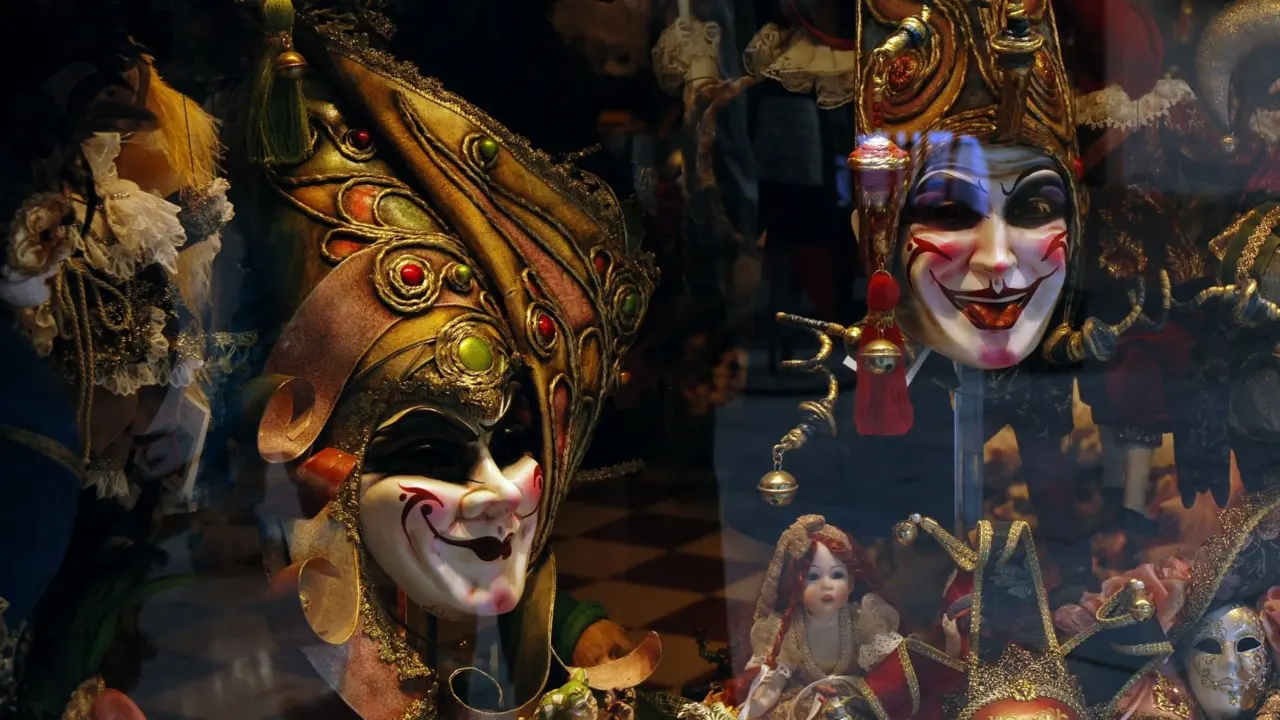
The classic types of Venetian masks to make are the colombina, larva, bauta, moretta and medico della peste. Start with a half mask or a plain white full-face base, and save the beaked and gilded designs for later.
If you want wider project ideas around these shapes, the guide to a diy masquerade mask covers the broader craft. The sections below group each type by the kind of project you have in mind.
Practice pieces for a first build
A first Venetian mask should keep the shaping and finishing manageable. Two classic types fit that brief: the colombina and the larva.
Colombina half mask
The colombina is a half mask that covers only the cheeks and rarely the nose, according to the World Travel Connector. It takes its name from Colombina, the maidservant character of the commedia dell’arte. Because it leaves the lower face open, it is the type most comfortable to wear for a whole evening.
That coverage also helps with practicality. A masquerade mask retailer’s guide notes that the half-face design is more practical than other designs, since you can eat and drink easily. For a maker, there is less surface to form and smooth, which leaves more time and attention for decoration such as trim, glitter and painted florals.
Choose the colombina if you want a wearable result quickly and expect to be at an event where you will talk, eat and drink. Its limit is that it offers less of the dramatic, anonymous look associated with full-face masks.
Larva (volto) full-face mask
The larva is a white mask that covers the whole face and depicts only basic facial features, as the World Travel Connector describes it. The simple features suit its purpose of anonymity. For a maker, that simplicity is the appeal: the work is mostly in a clean, even white surface rather than in sculpted detail.
It does ask for care over fit. A full-face design leaves little room for error around the eyes, and the same retailer guide points out that only a few full-face masks have mouth holes, which makes eating or drinking very difficult. Decide before you start whether yours will be a wearable mask or a display piece.
The larva suits makers who want to practise a smooth finish and then decide how far to decorate. It is a weaker choice if you want something quick to wear while eating and drinking.
Masks for wearing to a party
These two types give a more dramatic look than a half mask. Each one asks for more thought about shape, colour and how it will be worn.
Bauta
The bauta covers the entire face but is angled outward so the wearer can eat, drink and speak easily, according to The Creative Adventurer. It is usually white or heavily gilded and often comes with a tricorn hat, as the World Travel Connector notes. That outward angle is the feature to reproduce if you want a full-face mask you can actually wear at a table.
The bauta suits a maker with some experience of forming and smoothing, because the angled form has to look deliberate. If you gild it heavily, allow time for the finish. If you choose plain white, the smoothness of the surface carries the whole look. Pairing it with a tricorn hat completes the classic silhouette but is a separate making task.
Moretta
The moretta, also called the Servetta Mutta, is an oval mask with a black veil and no lips or mouth, per the World Travel Connector. The dark veil gives it a very different feel from the white and gilded types. It is a good fit if you prefer fabric and a restrained palette to heavy ornament.
Treat the veil as part of the design from the start rather than an afterthought, since it defines the look. Pick the moretta for a quiet, dark costume, and choose another type if you want bright gilding or a lot of surface detail.
Themed and display projects
Some masks are mainly about a story or a statement. The plague doctor is the best known, and it rewards makers who want an object with a clear identity.
Medico della peste
The medico della peste, or plague doctor, is white with two round black spectacles painted around the eyes and a long beak extending from the covered face. The Creative Adventurer stresses that this was a functional mask worn by doctors during the plague, not an aesthetic one. That origin is why it reads as a character costume rather than a decorative face covering.
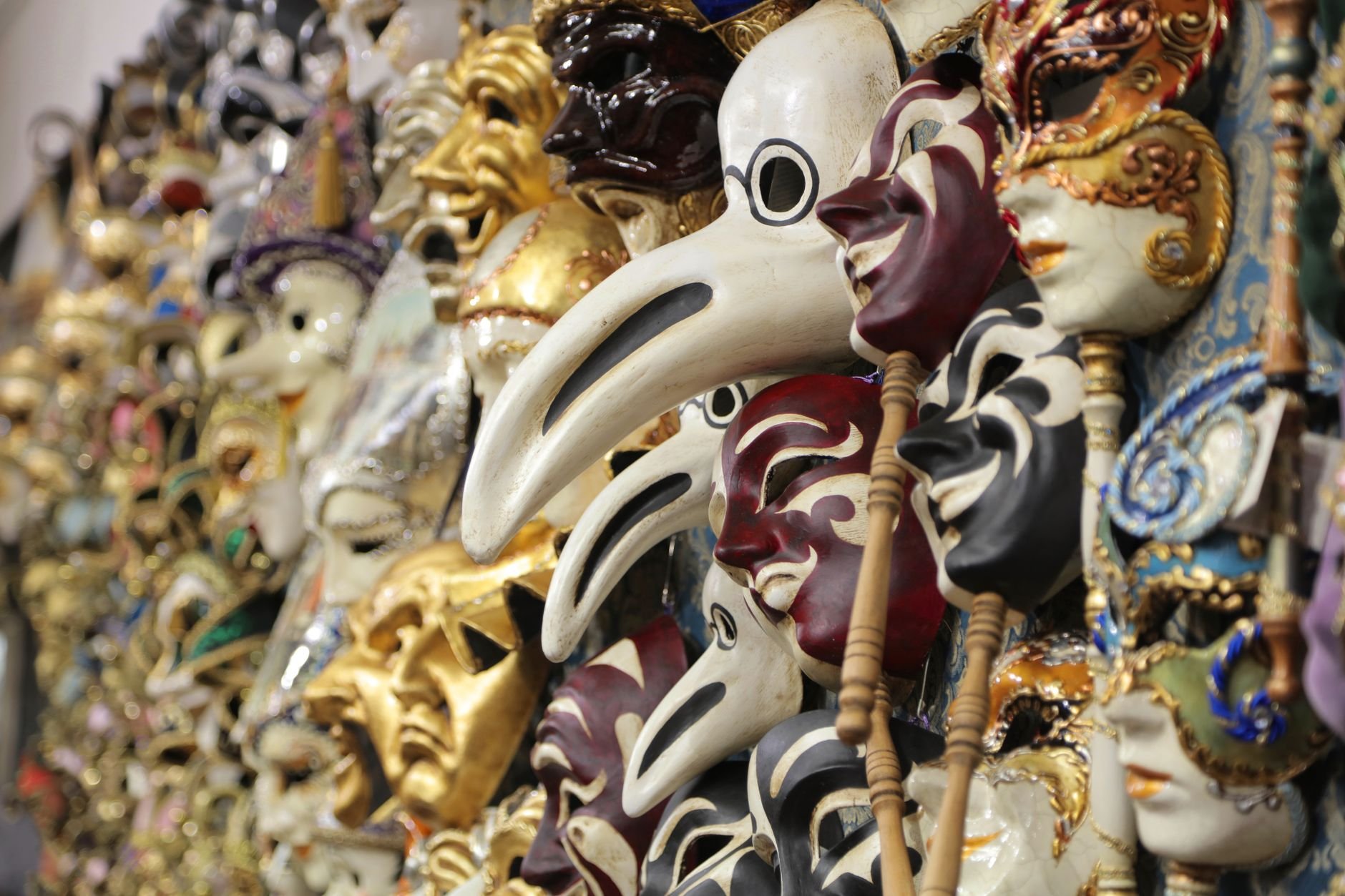
The beak is the hard part, because it must project cleanly from the face and stay symmetrical. The white face with painted spectacles is simpler. Choose this type if you want a strong themed piece and are willing to spend time on one projecting form. For a step-by-step build, see how to how to make a plague doctor mask.
Matching a mask to your skill and time
Traditional Venetian mask making begins with a large piece of clay carved into the desired face shape, then a chalk mould, followed by papier-mâché and a gesso base, as The Creative Adventurer describes it. You do not need to follow every step at home, but the sequence shows where the effort goes: the form comes first and the decoration last. The same guide says that some of the most intricate designs can take 2-3 weeks for one artist to finish, so plan your decoration to fit the time you have.
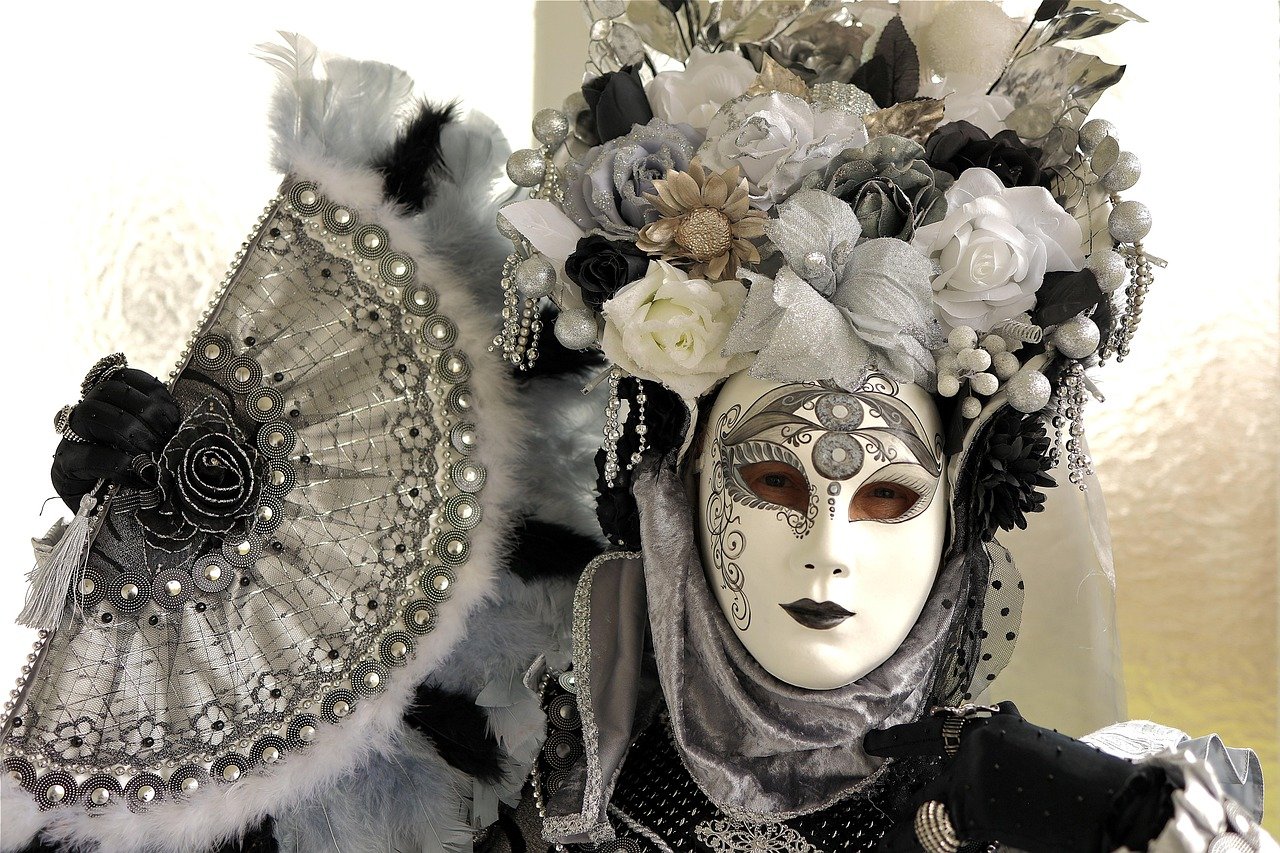
- Short on time: make a colombina and spend the effort on trim and painted detail rather than on shaping a large form.
- Practising a clean finish: make a larva, where the plain white surface shows every flaw and every improvement.
- Ready for a bigger form: make a bauta, where the outward angle and gilding both need patience.
- Drawn to a dark, minimal look: make a moretta and focus on how the veil sits.
- Wanting a character piece: make a plague doctor, and accept that the beak will take the most attention.
Handmade work has a clear advantage over what many shops sell. Laura Morelli’s guide to choosing a Venetian carnival mask observes that many of these masks are churned out in factories rather than made by hand. Making your own lets you follow a classic type more closely.

Carnival background behind the classic types
Venice Carnevale was established in 1168, according to The Creative Adventurer. Carnival was abolished with the fall of the Venetian Republic at the end of the 18th century, and it was not until the 1970s that it was brought back to life. The classic types you can make today are therefore both historical shapes and part of a revived tradition.
For a maker, that history is a reason to treat each type as a design to interpret, not a fixed template. A colombina, bauta or moretta carries its own character, so choose the one whose story and shape suit the way you plan to wear or display it.
Frequently asked questions
| Question | Answer |
|---|---|
| What does the name bauta mean? | The name is linked to a German word meaning to protect, according to The Creative Adventurer. |
| Why were masks worn at Venice Carnival? | Masks helped conceal the identities of both the lower and upper classes during Carnival, per The Creative Adventurer. |
| What was inside a plague doctor’s beak? | The long beak was stuffed with herbs and spices, as the same guide explains for the 17th century plague doctor mask. |
| Are shop-bought carnival masks handmade? | Many are not. Laura Morelli notes that many are made in factories and are not based on historical models. |